
Surgical Gown Interface Technology
Tuff Cuff™
The first surgical gown technology engineered to protect the glove–gown interface — one of the most vulnerable points in surgical PPE.
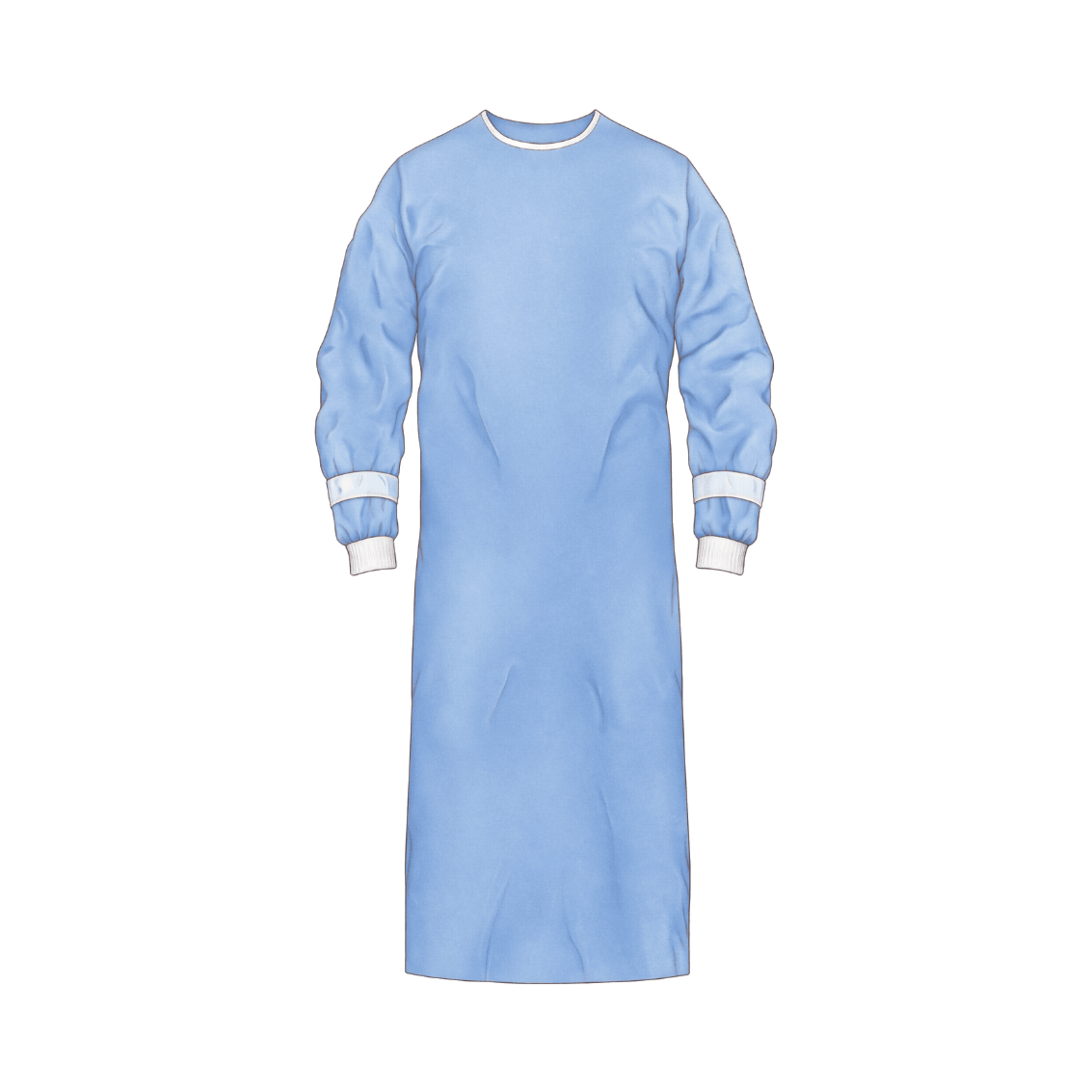
The Industry Challenge
The Weakest Pointin Surgical PPE
Surgical gowns are rated for the fabric that covers the body — but the seam between the sleeve and the glove is left to a simple overlap. Under pressure and the full range of motion of an operation, that gap is where fluid gets through.
Why the glove–gown interface fails
- No engineered seal. Standard gowns rely on the glove cuff alone to bridge the wrist. There is nothing locking the two layers together.
- Direct exposure for the surgical team. A breach at the wrist puts blood and bloodborne pathogens onto the skin of surgeons and scrub techs — the highest-risk contact point in the ensemble.
- It happens under normal use. Fluid migration is driven by the movement, pressure, and duration of routine procedures — not rare worst cases.
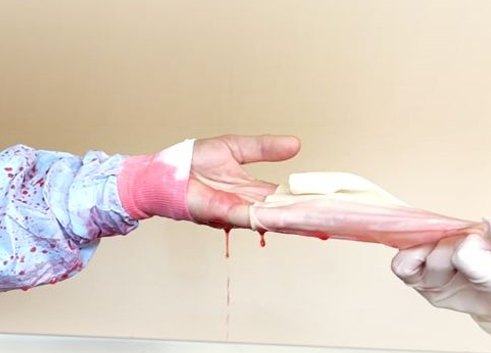
Federal researchers describe the glove–gown area as “one of the most vulnerable areas of the PPE ensemble.”
CDC / NIOSH · Kilinc-Balci et al., J Am Coll Surg, 2018The Research
The Evidence Behindthe Interface Problem
The vulnerability of the glove–gown interface is not a marketing claim — it is documented across peer-reviewed surgical and infection-control literature and quantified by 3rd party testing.
Kilinc-Balci et al. · J Am Coll Surg, 2018
Commercial gowns leak at the interface
Testing of commercially available surgical gowns found significant fluid leakage at the glove–gown interface under worst-case conditions, establishing the seam — not the fabric — as the failure point.
View publicationKahveci et al. · Surgical Infections, 2021
Failure spans the Level 4 market
Across AAMI Level 4 gowns, measured leakage ranged from roughly 1.7 to 26.7 grams. Interface failure was observed across virtually all commercial gowns tested.
View publicationCDC / NIOSH · AJIC, 2021
The primary exposure pathway
The gown–glove gap was identified as a primary bloodborne-pathogen exposure pathway for surgeons and scrub technicians — the point in the ensemble where protection most often breaks down.
View publicationIntroducing Tuff Cuff™
A Sealed Interface,Engineered In
Tuff Cuff™ replaces the open overlap at the wrist with an impervious, glove-locked seal — built into the gown sleeve.
-
Impervious polymer flap, welded to the sleeve
A fluid-proof film flap is welded into the gown sleeve, creating a continuous, impervious seal above the wrist rather than an open overlap.
-
Inner glove O-ring seats below the flap
The inner surgical glove is cuffed and positioned beneath the flap, establishing the first sealed layer at the interface.
-
Outer glove locks the flap down
Donning the outer glove over the flap clamps the assembly shut — the geometry that makes the seal hold through full range of motion.
-
Fluid is forced to wick against gravity
Any fluid reaching the cuff must travel upward against gravity to breach the seal. Under worst-case testing, no leakage to the skin was detected.
FDA-Cleared Innovation
The First Interface-SpecificLabel Claim for a Surgical Gown
Label Claim · FDA 510(k) K252575
The NYES surgical gown with Tuff Cuff™ is cleared to claim reduced leakage from patient to healthcare provider at the glove–gown interface using the double glove technique, compared to select gown models from manufacturers representing the majority of 2025 surgical-gown market share.
510(k) Cleared
K252575 — the first FDA clearance written specifically around glove–gown interface performance, not fabric barrier alone.
Clinical & Operational Benefits
Why OR Teams & HealthSystems Specify Tuff Cuff™
A documented, better-performing interface reduces exposure for staff.
Available Products
Surgical Gowns withTuff Cuff™ Built In
Tuff Cuff™ technology is integrated directly into NYES Protect sterile surgical gowns – manufactured domestically and available for evaluation and bulk supply.
AAMI PB70:2022 · Sterile
Tuff Cuff™ Disposable Surgical Gown AAMI L3 Sterile
- Disposable surgical gown featuring integrated Tuff Cuff™ technology for enhanced protection at the glove-gown interface.
- Engineered to meet the highest fluid barrier standard under ANSI/AAMI PB70:2022, providing maximum security during high-risk surgical procedures.
- Defends operating room personnel and patients alike against the transfer of microorganisms, body fluids, and particulate matter.
- Latex-free; single-use, sterile.
AAMI PB70:2022 · Sterile
Tuff Cuff™ Disposable Surgical Gown AAMI L4 Sterile
- Disposable surgical gown featuring integrated Tuff Cuff™ technology for enhanced protection at the glove-gown interface.
- Engineered to meet the highest fluid barrier standard under ANSI/AAMI PB70:2022, providing maximum security during high-risk surgical procedures.
- Defends operating room personnel and patients alike against the transfer of microorganisms, body fluids, and particulate matter.
- Latex-free; single-use, sterile.
Why NYES Protect
Innovation Backed byProven Manufacturing
Active and past federal supply across HHS, ASPR, DoD, VA, NIH & DLA, with multi-million-unit deliveries — produced at the Brooklyn Army Terminal with surge capacity for large procurements.
Ready to Improve Protection at the Glove–Gown Interface?
For procurement teams, distributors, and health systems: request specifications, samples, or pricing for surgical gowns with Tuff Cuff™ technology.
ppe@nyes.co · (212) 971-9101 · Brooklyn Army Terminal, Brooklyn, NY